Monday, 31 August 2015

Online work from home -Is making money from home REALLY a dream?

Making money from home is what most people would call a dream.  Working from home would be the ideal solution to the routine dead end rat race jobs of 9-5.

If you are an entrepreneur minded individual and are seeking inspiration to take that first step to having your own business, then this is for you!

Now imagine being able to work from ANYWHERE in the world!!! That is the beauty of an online business.

Whether you are a student, a person with a normal day to day job or at any stage in life, this is for you. If you are looking for inspiration, you will find it here. 

 ***CLAIM YOUR FREE BOOK NOW!*** 

Simply go to www.andrews-book-absolutely-free.com


Simply go to www.andrews-book-absolutely-free.com

Monday, 24 August 2015

5 Lessons Learned Analyzing My Most Popular Instagram Updates

5 Lessons Learned Analyzing My Most Popular Instagram Updates

Recently, I was honored to be featured by my fellow Entrepreneur contributor, Thomas Smale, on his list of “8 Inspiring Instagram Accounts You Should Follow.” Being recognized on this list meant a lot to me, because everything I do on Instagram (and in the rest of my life) is dedicated to one thing: inspiring my students to succeed.

But being called out as having an “extremely popular Instagram account” got me thinking. What is it that’s made my account so successful so far? To get some answers, I decided to run a free Instagram activity report from Simply Measured to determine which of my posts have received the most engagement so far and why.

Without further ado, here’s the list.


1. Run a giveaway.


According to Simply Measured, this post racked up 9,515 Instagram likes, 4,505 Instagram comments and 22 Twitter engagements, for a total of 14,042 engagements. Frankly, I think it’s easy to see why, since responding to the post entered followers into my $20,000 cash giveaway!

I’d read about how engaging social media giveaway contests can be before, but this post in particular really gave me proof. Even if you aren’t working with $20,000 cash, giving away something on your Instagram account could be the secret that helps you drive massive engagement.


2. Inspire with visual content.


Most of my Instagram updates involve posting pictures of the amazing places I’ve traveled to inspire my students to achieve the same kind of lifestyle. This works, because Instagram is a visually-oriented network, more so than any other social platform.

But I have to say, although I post a lot of pictures, this one is one of my favorites. It’s absolutely stunning, and it’s no surprise to me that it’s earned a total of 12,609 engagements across Instagram, Twitter and Facebook. If your own engagement is lacking, you can’t go wrong posting beautiful pictures (just be sure to give credit where credit is due!).


3. Use hashtags wisely.


The update below (which captured 11,978 total engagements), succeeds, in part, because it takes advantage of the “beautiful picture” principle I described above:


But there’s more to it here. I also attribute some of the success of this update to the hashtags I used. Tags like #FinancialFreedom, #DailyMotivation, #DreamLife and #DailyInspiration help expand the reach of my posts, while simultaneously inspiring my followers to prioritize these principles in their lives.

If you aren’t currently taking advantage of Instagram’s hashtags, start today. Tag using both popular hashtags and conversational or inspiring phrases for maximum impact.


4. Ask for engagement.


If you’re building a presence on any social networking site, engagement is at least part of your goal. But unfortunately, people don’t just engage automatically. Often, you have to ask them to engage in the ways you want.


That’s part of what made my fourth most successful post, which wound up with 10,069 engagements, so popular. Right there, in the text, I ask “Who wants to come?” Combine that with the giveaway mentioned, the use of an inspiring image and a collection of great hashtags, and you’ve the perfect recipe for engagement.

Best of all, this tip is easy to implement. Want more engagement on your Instagram posts? Simply ask followers to do whatever it is you want them to do.


5. Use leading questions.


This is kind of a continuation from the tip above, but one of the most effective ways to encourage your audience to engage with your profile is to ask them leading questions.


In this case, the question I asked was “Can you guess which island?” Essentially, I turned my post into a game for my followers and I wound up getting a great response in return. To date, the update has received 9,489 Instagram likes, along with 224 comments, four Twitter engagements and six Facebook engagements.

That’s the power of leading questions!

Just like the tip above, you can apply this to your account easily, no matter how many followers you have. In addition to asking for specific types of engagement, ask your followers a question and encourage them to leave a comment. If you can make it fun, they’ll respond - and, after all, that’s what social media is all about.

I’ve grown my stock market education business through social media and these are just my best guesses about what’s made these posts more successful than some of my others. But if you have any other tips or insights you’d like to add to this list, I’m all ears. Leave me a comment below describing the Instagram techniques that have made the biggest difference in your engagement levels.

Friday, 12 June 2015

Twitter to Lift 140 Character Limit on DMs

Twitter announced Thursday that beginning in July (no specific date has yet been given), they will be lifting the 140-character limit on direct messages, giving users 10,000 characters with which to express themselves and mimicking more of an instant messenger feel.

In many of the chats I participate in, the common theme of “do online conversations fuel offline conversations” often comes up. Is this an effort on the part of Twitter to attempt to curtail this? Keeping you on their site longer, as opposed to taking conversations from DMs to email, so you can write more, talk longer?

New messaging apps are launched every day, competing for our share of mobile minutes and attention. I find this to be a smart move by Twitter, and one that I welcome. I am already on Twitter, and now I can get more out of it without the frustration of trying to follow along with a DM stream that I often picture as a trail – and if laid out could circle the globe 5 times over.

The Pros


I think it will help when it comes to customer service. I find that most people (myself included) are much more likely to reach out to a company on Twitter for a quick response if I have a complaint or need help, then I am to email them. Brands will now be able to respond to customers right then and there, rather than having to say “email me.”

When I use DMs, I use them to for longer info, engagements and conversations that I can take part in a quick tweet. Having to constantly send these DMs mid-sentence has been a bit of an annoyance, breaking up thoughts and the natural flow of conversation. To avoid this, I will generally take these conversations to Facebook or another messaging app. As Twitter is my favorite social networking platform, this is a great move to compete with other messaging apps, keeping me on Twitter, rather than sending me to another platform.

If this allows me to use Twitter the same way I would use a text message, I could cut down on any additional fees I may incur on my mobile bill, if I go over my text message allotments, or whatever package I’m subscribed to, which keeps me within a certain (much too small) range of what I can send to friends. I also will save memory on my cell phone, not having to download another app that will allow me to converse in long form with friends. Facebook recognized the need for ease of messaging long ago – through their messaging platform as well as their acquisition of WhatsApp.

The Cons


At first glance, the only con I saw was that since removing the “only people you follow can send you DMs” anyone could send me an extra-long DM, selling to me without me looking to them for information on their product or services. However, you can uncheck the “Receive Direct Messages from anyone” box in the security and privacy section in Twitter’s settings to stop this from happening. Twitter is allowing you to stop people you do not follow from sending you these new, longer DMs.

I’m interested in your thoughts on this new development. For now, I find it will allow conversations to be more fluid and natural, and I’m looking forward to it.

Tuesday, 9 June 2015

Why We Click: The Simple Psychology Behind Calls to Action


Modern marketers have certain overarching goals in common: Connect with the audience and move its members to take meaningful action. In the digital world, meaningful action usually means a click of the mouse (or tap on the screen), which leads to a conversion.

But often overlooked is the thing that everyone’s actually clicking on: the call-to-action (CTA) button.

For example, did you know that some buttons appear to our brains to be more clickable than others? For years, smart marketers have used basic brain science to develop campaigns that grab our attention -- and CTA buttons are no different. Below are four tips from our Why We Click guide on how the right button color, copy, shape and placement can help skyrocket your click rates.


1. Compelling color


Color matters, probably more than you realize: 85 percent of people say color is the main reason they buy a product. There’s no magic color that converts best, so pick a button color that contrasts with your design to make it stand out (think: orange on blue). Or, use a color that promotes a certain feeling.

For example, orange encourages immediate action. Consider orange for asking people to sign up, buy or join right away. It’s also the color most associated with cheap or inexpensive things. And, we all know green means "go," which is pretty handy when it comes to CTAs. It’s also the easiest color for the eyes to process, so it’s often used to relax the mind and promote growth.


2. Clickable copy


A CTA's whole life's purpose is to move someone to take action right away, so try to write copy that’s irresistible to click. It should be specific: Think “Download the guide” rather than “Click here” -- and use active verbs like “start” and “get.” Passive words create lazy mouse-finger couch potatoes, so lead with an active, energetic verb to drive more clicks.

One recent study found a 90 percent better conversion rate using first-person language, e.g., “Start my free trial” vs. “Start your free trial.” Also, simply adding the word “now” to a CTA button can boost conversions by creating a bit of extra urgency.


3. Shape and size


Rounded, big, tappable and tested: These four adjectives should describe every CTA button. Ever. Rectangular buttons are by far the most popular, but since our brains are programmed to avoid pointy things, make sure to round off the corners. Buttons should also be big enough to be easily tapped on a mobile phone, just not so obnoxiously big that they ruin the overall design.


4. Prominent placement


CTA buttons shouldn’t be vying for attention. You should make clear at a glance what you want your audience to do. When you place buttons above the fold, your audience will see them even if they’re just scanning the email or page. Visitors spend almost 80 percent of their time above the fold, so you’ll catch those folks who are ready to act right away without forcing them to sift through content to get there.

Also, surrounding buttons with white space helps them stand out, so give CTAs plenty of room to pop, but not so much space that they don’t feel like part of the overall design. They should attract the eye, not look lost in the desert.

Every audience is different, so you’ll have to test colors, copy, shapes and placement to find the right combination of buttons that sends your conversion rates soaring. After all, A/B tests can improve conversion rates by as much as 49 percent!

Saturday, 6 June 2015

Sunday, 24 May 2015

Squeeze More Opens And Clicks From Your Broadcast Emails


Don't just send a huge email blast to your entire list, says columnist Daniel Faggella. Here are a few ways novices can dip their toes into segmentation without making a huge investment.


If you run an online business, odds are you utilize broadcast emails as a marketing tool. And, while just shooting out a one-size-fits-all email can be an effective weapon in your marketing arsenal (occasionally), it’s important that you also aim properly and use the right ammo to hit your target audience.

The simplest ways to get more engagement (opens and clicks) from your message is to segment your email list into different groups and tailor the emails you send specifically to those groups. Relevance wins.

Segmentation 101: Buyers Vs. Prospects


Although there are countless segmentation strategies that a business might adopt, most everyone can make the distinction on their email list between “buyers” and “prospects.” Though the distinction may seem arbitrary, it isn’t — and you can tailor your message to address these different groups and yield a higher ROI on your emails than you could if you just sent out one blanket message.

As an example, an email to previous buyers can acknowledge and thank them for their previous purchase, update them on new products, and sell them on the benefits of some of the other products you offer. For an email to prospects, simply remind them of the benefits of your product that generated their original opt-in, and perhaps offer some incentive to help convert them from “prospect” to “buyer.”

You might even send the same message to prospects and buyers, and merely make minor adjustments, like those you see below:


The small above “tweak” to the same email offer to the buyer and prospect segments of your list takes very little time or copywriting skill (as you can see above). Seems like too “lazy” of a change to really modify the response rate of your recipients, doesn’t it? Think again.

Often we’ll see that small segmentation changes with small “boosts” in response rate produce big results. Here’s an example of what might happen to your sales by sending out such a segmented message:


Would you prefer 48 sales or 82 sales? Now, it goes without saying that no email yield is guaranteed, but results of this kind are not uncommon in e-commerce. But most marketers decide to “blast” their list with the same message anyway.

I’ve written at length about startup companies tending to completely neglect this kind of back-end email marketing and segmentation — but needless to say, it has its payoffs. The results can multiply with our next strategy:

Strategic Segmentation


An even more effective method of email marketing is to segment your lead list further.

While this type of additional segmentation will be different for every business, know that how you segment your email list is an important, strategic decision, and it’s vitally important that you get it right. To do that, think about what your customers need and want and develop segments that will allow your business to make the most money from your leads.

This is where you might apply what I call a “front-end fork.” Just as you might use your dinner fork to keep your meat, potatoes, vegetable and salad separate on a plate, use a front-end fork to separate your leads into specific segments of your marketing plate.

To illustrate, let’s say I’m running an online business offering premium teas. Immediately, I can break my previous buyer’s segment down between those who buy assortments, sampler buyers, those who only buy a single blend, leaf buyers, bag buyers, those who’ve purchased gift sets for friends and family and even by lead source.

From there, you can segment within segments based on ordering frequency and history, organic tea buyers, organic and fair trade buyers, and many more.

While your product line may not be as diverse as my theoretical tea business, the key is to develop at least two to four segments that will allow you to tailor your email message more specifically to the needs of the customers in each segment.

This “core” strategic segmentation criterion will be one of your most important bits of knowledge when it comes to your email list. Here are a few examples:
A B2B software company might want to segment by company size (1-10 employees, 11-50 employees, 50 or more employees);
A martial arts academy might want to segment by program of interest (women’s kickboxing, kids martial arts, general adult martial arts);
A marketing consulting agency might segment its prospects by its main desired goal (more leads, more e-commerce sales, or more phone sales/in-person sales);
Etc.

Make sure the segments and sub-segments you develop will give you the best opportunity to sell to that prospect. Once you’re confident in those segments, whether you have two, three or even eight, craft messages that directly address their needs. Remember to ensure that your message resonates with what your customer cares about.

Using Different Promotional/Engagement Approaches For Different Segments


So, now that you have your aiming strategy down, let’s look at the ammunition you might need. That is, the methodology of your broadcast email.

First off, remember that different segments require different ammunition, and no matter how many segments you have, ultimately, the goal of any broadcast email is sales. Knowing that, your email message is effectively limited to straight sales or a combination of content with a sales offer somewhere. In my Entrepreneur on Fire interview about email marketing tactics, I bring up a few unique strategies that I’ve used in my own businesses, but here let’s explore some potential promotional changes you might make.

Straight sales emails are just that: emails with promotional codes, new products, or bundle offers. You don’t have to be a seller all the time, but you definitely want to always leave the door open to make a sale.

Hence, while the bulk of a pure content message can be a blog about new products or happenings in your industry, make sure to always include a sales offer somewhere in the email. That can take the form of a discount code on the side or bottom of the page or even a link within the copy. Your content message may not be a hard sell, but remember to give your customers the opportunity to buy.

Next up, think about the frequency of your email broadcasts. The key here is to develop a marketing schedule that will have you broadcasting at least twice a week. For my theoretical tea company, Tuesday and Thursday might be the preferred days to broadcast. Maybe I send out sales messages on Tuesday and a content message on Thursday. Or maybe my tea company emails to my buyer segments on Tuesday and my prospect segments on Thursday.

Remember to differentiate the message to recognize the segment. And, since your business is a completely different cup of tea, it’s important to develop a marketing schedule that’s best for your niche.

Once you develop that schedule, remember that it’s not etched in stone. Watch your response rates, and get a sense of how your customers respond to both your sales and content messages. If your sales messages significantly outperform your content emails, recalibrate your messages and your schedule.

Look for trends that you can leverage to make the most of each and every email broadcast. Once you see those trends, toggle your schedule and your messages as needed to maximize the effectiveness of every email broadcast. And as you toggle, remember, always find a way to segment!

Conclusion


Think of your email list as a bull’s-eye. A huge email blast to your entire list will likely hit some of that outer circle, but a segmented broadcast message will allow you to hit those rings closer to the center.

Look at your response rates; adjust your aim; find the right messages, broadcast days and frequency that are right for your online business. Then, once you hit the center of that bull’s-eye, keep firing!

Thursday, 9 April 2015

5 Web Analytics Metrics to Pump Up PPC


These five Web analytics insights can help you boost your pay-per-click marketing efforts.

Using Web analytics to gain insights about user behavior can be an effective way to develop new strategies for pay-per-click accounts.


High-Revenue Keywords

Tracking revenue and goals in analytics is extremely helpful, especially for this exercise. Review keywords bringing in the top percentage of revenue or leads. What are the commonalties? For example, say the majority of your top revenue keywords tend to be branded. Look for opportunities with non-branded keywords, and ensure they are in the correct campaigns or create new ones and assign additional budget to optimize revenue potential.


Sign-Up or Cart Abandoners

An "abandoner” is a site user who started down the conversions path, but for some reason left the site and therefore didn’t convert at that time. By looking at the Web statistics of the relevant pages, you can see how many users bounced from the site, or stayed for a very short time. This may occur directly before a user has to input personal information or credit card information. Use this abandoner data for retargeting campaigns to reach them again with appropriate messaging. For example, for someone abandoning a shopping cart, serve ads with a discount toward the next purchase or remind them of free shipping. For an account sign-up, perhaps message them on the advantages to becoming members. Urgency will be important because abandoners may forget about their site activities by the week’s end.


Content Consumers

For companies that invest in content or blogging on a regular basis as part of their marketing strategy, users who are viewing or interacting in some way with the content can be valuable to reconnect with and drive into the conversion funnel. Two interesting ways to do this:

  1. Remarketing to users who visit specific content and serve ads with complementary products or services. You can select multiple pages of similar content or specify a length of time on the site to ensure they are the most qualified leads.
  2. AdWords offers a type of targeting called Remarketing Lists for Search Ads that reaches previous site visitors based on searches in the search results pages and on their activity on the company’s website. In the case of content, if a user is frequently reading a specific content topic, then conducts a keyword search on Google.com, it is possible to reach them with a customized ad text.

Highly Engaged

Engagement with a visitor will depend on the website and audience, but generally in analytics you will be looking for returning visits, page depth, time of the site, and number of visits. Identifying the engagement of converters vs. non-converters can give insight into how a campaign could be designed for best results. For example, say the majority of converters purchase in one day. For a new potential customer, using ad copy with timeliness might be important to communicate a same-day sale: "in stock-now," "fast, free shipping," "daily deals."

Saturday, 7 February 2015

5 Tips to Boost Your Customer Referrals

Do you want more referrals?

Have you asked your social media connections for help?

Asking satisfied customers to share your message and provide social proof is an easy way to increase your social media referrals.

In this article you’ll discover five tips for getting more customer referrals on social media.


#1: Identify the Right Social Networks


Targeting is important in every area of marketing. Every company has a different target audience so it makes sense to adapt your tactics and target your specific prospects on the social platform they visit most.

Discover how to boost customer referrals from social media.

Not every social network’s audience is the same—research which platform works best for your business. For example, while Facebook works great for attracting individual consumers, LinkedIn is often better for B2B products or services.

Test a few social platforms to see which one is most successful for you. Come up with a plan that encompasses all of your various audiences and segments, and then create different invite/referral programs for each. When you find what works, ask customers to share on that channel.


#2: Ask for Social Proof


According to Nielsen’s Trust in Advertising Report, 84% of consumers say their friends and family are their trusted resources. Any referrals coming from a trusted resource are persuasive because it’s social proof that your friend believes something is worth noting.

Think about it. If a friend tells you about a new store she went to that she thought you would like, there’s a good chance you’ll check it out for yourself when you have time. When a recommendation comes to you directly from a friend, that social proof has a heavy influence on your behavior.


Mentions like this one for Rubio Long Snapping and Chris Sailer Kicking create valuable social proof.

That influence doesn’t change online. Active social media users are already sharing on a regular basis, and their friends, family, colleagues and followers see those shares and take them into consideration.

When an invite to check out a page or business online comes from a trusted resource, the potential new customer is significantly more likely to check it out and continue on to the next step in the purchase process.


#3: Offer Incentives


If you can entice your customers to share your product or service with their network, you can use the power of social proof to grow your business. To encourage users to provide social proof, offer them an incentive.

Everyone loves a good promotion and there are so many ways to offer them. For example, you can offer a discount on the next purchase or give a free gift with purchase.


Beyond the Rack offers a $10 shopping credit when customers invite a friend to sign up (e.g., become a fan, subscribe to a newsletter, etc.) and that friend follows through. If someone is satisfied with your product and thinks their friends would like it, why wouldn’t they share to get a coupon?

Dropbox increased the number of referrals by offering something useful to their current customers.

When Dropbox users refer a new customer, they receive 500MB of free storage.According to Drew Houston, this incentive grew Dropbox signups by 60%.

The cost of offering an incentive is minimal if it means gaining a new customer. If you deliver customer satisfaction, you end up with more happy customers who may also share their experience with their social network and refer even more customers to you.

Before you settle on a single incentive, do some A/B testing to see what results in the highest return.


#4: Customize Your Message


When you ask your customers to share, make it as easy as possible for them to do so. Have a pre-made message ready to go so they don’t have to spend time coming up with their own.


Do the heavy lifting so your customers can share quickly and easily.

When creating these pre-populated messages, avoid being generic. Would you click through and support a company with a message like “This is our product, it is good, please buy it”? I’m betting no. Avoid the boring and go for the creative.


What you say and how you say it counts so make your message interesting.

NatureBox, a monthly snack box subscription business, is really good at crafting messages customers are happy to share. The company includes attractive photos that make the post more appealing and their content makes a customer’s extended network want to check it out!


#5: Promote Exclusivity


Do you remember when Pinterest was by invitation only? You couldn’t just sign up for an account—you had to use a referral code from a friend. When I was able to offer an invite to my friends, I was the hero who helped them get into the exclusive platform. The friends I invited felt special.

Requiring a friend invite in order to join something does two things. First, it encourages users to share your site (providing social proof and extending your reach). Second, it creates exclusivity, which people love.

Invitation-only opportunities create a feeling of exclusivity for users. Image: Shutterstock.

Once Pinterest was established and had created buzz through those initial exclusive accounts, the platform was able to maintain its momentum when it opened its doors to everyone. Even though it wasn’t exclusive anymore, existing users still felt special because they’d been part of a select group that had a sneak peek.

Over to You

It’s important to be subtle when asking for customer referrals. Your customers are more likely to share if you don’t come off as intrusive. Offer high-quality incentives to get the ball rolling.

Constant testing and optimization makes your social referral plan successful. You can test where you ask customers to share, which networks are most successful,the incentives that you offer and any other factors involved to ensure that you’re getting the most benefits from your efforts.

What do you think? Have you asked your happy customers to refer people to you? What results have you seen?

Saturday, 17 January 2015

5 Reasons Your Small Business Should Start a Podcast Today

Since the dawn of digital there has been a ton of talk about what your company should be doing for digital marketing. Whether it is paid search, social media or blogging, there is no shortage of ideas and advice. However, one of the undeniable forces drawing businesses and their customers closer together is the ability to weave a better story.

Content marketing is a great way for brands to tell their story, and I would argue that one of the best vehicles for content marketing today has to be the podcast. Indeed, podcasts like Serial have found a way to captivate an audience of hundreds of thousands, and create a loyal following. The buzz around that particular podcast has primed the medium for take off.

Besides uncovering interesting and relevant information chosen by the person, podcasts are an easily consumable content format, and it doesn’t require a person’s undivided attention like video or text-based content does.

Here are five reasons of why you should start exploring the benefits of podcasting for your business, now:


1. You can become more intimate with your audience.


When there are a zillion more brands and businesses vying for audience attention in the online space, it’s evident that the plain old tricks of content marketing may not keep working for your business. You’ve got to be different. By allowing you to talk to your audience directly, in your own voice, podcasts help you connect with your audience on a deeper and more personal level. 


2. You have the whole playground for yourself. Well, almost.


Despite the benefits and the relative ease of podcasting, few businesses are actually doing it. Including podcasts in your content-marketing strategy can give you the leverage that helps you stay ahead of your competitors.

Take cues from the experts who are doing it right. I’ll point you to some very credible voices doing a great job of podcasting: Michael Stelzner, Pat Flynn, Jay Baer, Srinivas Rao, and of course you should give Serial a listen. This gang can help you start your podcasting venture on the right foot and Serial will show you a prime example of what is working for this medium. 


3. There are many possibilities with podcasting.


If you think that podcasts are for one-way communication with your audience, you might be mistaken. You can share your ideas with your audience in so many different ways with podcasts. You can review products and services. You can invite an expert or thought leader to be a guest on your “show.” You can interview experts, and even consumers. Podcasting is a great way to put forth the views of people your audience is most likely to trust -- experts, and their peers.


4. You can distribute podcasts through multiple channels.


While the most common thing to do is to broadcast your podcasts on your website or blog, you can spread their reach across the global audience through services like iTunes, Stitcher and SoundCloud. You can also use social channels to share your podcasts with your audience.


5.  Podcasts connect employees to their organization.


Podcasts not only brings your brand closer to your audience but also give you a scope to connect with your own employees. You can use podcasts for training your employees, making announcements and applauding them for their good work. Once you earn their trust and satisfaction with your brand, they will be among the first ones in line to buy your products or tout your services. 

There’s nothing stopping you. Go get your recorder and start podcasting. I’m sure it will be one of the smartest decisions you’ll ever make for your small business.

Saturday, 3 January 2015

YouTube-Style Analytics Make Their Way to AdWords for Video


The new additions to AdWords for video will help marketers create ads that people choose to watch.

Google's AdWords for video has been revamped to offer a more YouTube Analytics-style performance, bringing a greater focus on video creative to campaign management and optimization.

Up until now, marketers using AdWords for video, have been able to add targeting and budgets to their YouTube videos to make video ad campaigns. But until late last week, should they have needed more information on how their videos performed outside of when they appeared as ads, they needed to jump over to YouTube Analytics for that data.


The new Video Analytics page prominently features a visualization of your video’s views, split by paid and non-paid to give a holistic sense of how your video is doing. The page also brings the audience retention graph to AdWords for video, which was formerly only available in YouTube Analytics. With the audience retention chart, advertisers can fine-tune their creative by visualizing when audience interest waxes and wanes. For example, if advertisers see a steep viewer drop-off at a certain point, the chart alerts them to an opportunity to re-cut their video to hold their interest longer.


The new reporting page also offers a panel that provides a sense of a video’s contribution to overall account performance, letting advertisers see which videos are over- or underperforming across all their campaigns, and more fully depicts how your video creative is helping to build their audience on YouTube.

This may seem like a small stocking stuffer, but this new feature provides more context for your video ad creative, and helps you make ads people choose to watch. And that’s a big gift to advertisers for the holidays.

Monday, 22 December 2014

4 Reasons Your Customers Aren't Sharing Your Content on Social Media


Content marketing and digital media strategies often (if not always) include social sharing as a metric for success. Creating highly engaging, widely relatable content is a crucial step towards earning an audience's attention. But while pageviews are important, marketers need a deeper understanding of why people share it to create content that will reach further.

To learn more about sharing motivations, we surveyed more than 1,000 adults and asked them about the aspects of their identities that matter most when they share online. Combined with some research on why users hesitate to share, we now have a better understanding about how audiences use content to talk to each other, and about themselves.


1. 71% of users are reluctant to share content.


71% of Facebook users censor the comments or posts they compose, according to a recent study by researchers at Facebook and Carnegie Mellon University. Over a 17 day study period, they found that 15.3 billion comments and posts were written but deleted before being shared.

There are many considerations that factor into this censorship process. One is a user's concern for how a comment or piece of content may reflect on themselves. Another is the appropriateness of a message for the various social circles--ranging from friends to family to employers to clergy members--who may all be a part of the same contact list, and will thus all see the same post.

Regardless of the cause, the widespread act of self-censorship is a flag to content creators that audiences are highly selective about what they share and actively review and consider the content
they amplify to their friends and followers.


2. Salient identities prompt us to take action.


According to social science, five broad categories encompass the aspects of ourselves that help determine how we behave:
Relational Identity
Personal Identity
Social Identity
Superficial Identity
Collective Identity

We assess the importance of each factor in every social situation we encounter, and prioritize these aspects according to our current circumstances. Collective identity, which focuses on groups we are a part of, may be the most salient identity at a soccer game, but personal identity (which revolves around values and goals) is likely more important during a job interview.

The ranking of these identities is important to understand when it comes to online sharing. The aspects that are most salient when users are on social media determine the type of content they are most likely to share.The more your content can help them amplify the way they want to be seen, the more shares your content will earn.


3. Users want to be seen as being a good friend.


84% of respondents in our survey said that "being a good friend to those I care about" is an important factor they consider when they use social media; 20% said that their relationships are "extremely important." These concerns for relational identity were the most salient across every generation in our survey, but strikingly so among those in the 65 age group.

Content creators will gain the most traction by building campaigns that help people relate to one another when they share it. BuzzFeed has found unique success online by tapping into this very insight, according to Ze Frank, head of BuzzFeed video, and focusing on content that encourages users to share and say "I know you, I like you."


4. Sharing goals and values.


After their friendships, 63% of social media users said that their values, goals, and dreams--aspects of personal identity--were the next most important concerns on their list. This was particularly true for younger generations; both younger and older Millennials ranked personal identity factors higher than older groups.

It's important to note that while values were highly ranked, religion was ranked as the least important factor in this study. In fact, 55% of respondents ranked this factor as "not important" when they consider whether to share content. Content marketers may want to broach content relating to personal identity from angles of inspirational quotes rather than from a standpoint of religious or political affiliations.

Saturday, 13 December 2014

5 Tips to Optimize Your Time as an Entrepreneur

5 Tips to Optimize Your Time as an Entrepreneur
Each morning people wake up and choose how they will start the day. For some, this may mean a quick workout before heading to the office and for others it could mean spending some time with their kids, reading the morning news or catching up on work-related emails.

In reality, everyone is making personal and professional trade-offs -- spending time here versus there. But ultimately being effective is not a matter of finding a balance between two spheres, but rather it's optimizing how you spend your time across the board. It's time that people embrace the notion of time optimization and put the idea of attaining work-life balance to bed.

The secret lies not in weighing opposing priorities, but in planning ahead so as to have time to spend it where you wish.

As 2015 quickly approaches, entrepreneurs should aim to set intentions for each and every day to fully optimize your time throughout the year.

Here is my approach to optimizing time in 2015:


1. Don’t follow a one-size-fits-all system.


Recognize that everyone optimizes time differently. My priorities and the demands on my time will differ from yours, another CEO’s or even those of someone in my family.

The key is to create an individualized plan that works for you based on all the factors at hand -- available minutes in the day, amount of sleep required and work commute. I believe there is no one-size-fits-all approach and that people need to optimize all aspects of their lives on an individual basis.


2. Make time for in-person communication. 


Often, there are lapses in communication over text, email or even the phone. While people think these digital forms of communication are making them more efficient and social, they are actually wasting time deciphering mixed messages and clarifying points of view.

Constant interaction through digital technology prevents people from stepping back and engaging in physical reality. People often forget how much more efficient they can be by stepping away from the computer, meeting with someone in person and working through a task or issue. It’s not just comical when people seated at the same table send texts to one another. It’s sad. 


3. Create a log.


If you feel that your time isn’t being allocated efficiently or are unsure of where the hours in your day are being spent, it's time for a log. Creating a log will help you identify what activities take the most time and will help you identify where you can cut back or shift priorities.

To optimize my time I have been keeping a log for the past 15 years of my life. I can tell you approximately how many hours I’ve spent working, networking, exercising, playing guitar or taking part in social activities. Yes, you can even make time for your social life.

A log, which can be as simple as a well-kept electronic calendar, also provides an honest view of where someone is spending his or her time and is a good way to assess if adjustments should be made. From personal experience, I can say it's far too easy to spend time on activities that preclude you from making the most of every moment of your day. 


4. Plan ahead.


I suggest planning way ahead. I had most of the major milestones of 2015 in my calendar before carving 2014's Thanksgiving turkey. Scheduling big work events such as board meetings or conferences in advance provides anchor points to build the year around. Be transparent in communicating the master schedule so that colleagues can plan vacations and maximize time in other parts of their life.

Integrating these tips as you consider your outlook for the new year can be a defining point in your professional and personal success. Remember, no one is perfect and even if you follow these tips, there will always be distractions pulling your attention away from what really matters.

It's easy to become wrapped up in the highs and lows associated with daily tasks at work or home. Taking a step back to reflect when this happens is an important activity to embrace. In the end, it’s not about counting the minutes of the day but rather optimizing your time across multiple activities and leading a fulfilled life.

Wednesday, 3 December 2014

4 Tips for Making Millions Quickly Marketing Through Infomercials

Most of us have heard of the ThighMaster, the Snuggie or the Ginsu Steak Knives as overnight success products that have amassed millions of dollars selling directly to consumers through Direct Response Television (DRTV) commercials.

Warren Tuttle, president of the United Inventors Association of America, has been working within the DRTV industry for decades. He was the person behind the television direct response mega-hit Smart Spin that generated nearly ten million units through a series of successful infomercials. I sat down with Warren to get his top four tips to getting your product to launch through DRTV and be the next mega wonder.


1. Rapidly create national brand recognition


The biggest advantage of DRTV is the ability to create, very rapidly, brand recognition through significant exposure on today's most dynamic advertising medium. Consumers are more likely to shop for a product they have seen six to eight times, through repeated TV ad exposure. Successful DRTV programs can drive significant sales volume and eventually provide retailers with very high sales, rapid stock turn, strong gross margins and increased bottom line profits.


2. DRTV companies focus on different niches


DRTV companies are no different then other industries when focusing on specific niches or areas of differentiation. Some are house and home oriented, while others focus on exercise or personal care. Even the length of commercials are different, as some companies are excellent in developing two-minute short forms, while others better at the 30-minute long format.

Keep in mind, though, that not all products are well suited for DRTV success. It is a rapid roll out process, where a product generally moves through a short selling life cycle at a highly accelerated pace. Some products require a slower burn to get to market and succeed, while other products are more platform oriented with a line up of SKUs that need to be appropriately showcased. Products need to be highly demonstrable. Not all successful products are, so it may be better to introduce some types of products to market through a traditional retail roll out and avoid the DRTV model altogether.


3. Do your homework interviewing DRTV companies


Each DRTV company needs to be researched and vetted. Inventors need to do their homework and find out what success stories each DRTV company has been responsible for, in what industry they specialize and how they have treated the individuals who have brought them products in the past. Inventors need to fully vet each company's history and reputation, since there are companies that have scammed inventors in the past.

Make a point to attend one of the industry trade shows such as The Response Expo or the Electronic Retailing Association Tradeshow as these shows can provide a great opportunity to find resources and build connections for your product launch.


4. Avoid upfront costs launching your DRTV product


Many successful DRTV companies will provide the necessary capital, along with creative production and manufacturing resources to test products and roll out successes and simply pay the inventor an ongoing royalty. Patents are generally helpful and typically command a higher royalty but are not always necessary. It depends upon the product and the DRTV company, so it is critical to align correctly. Working prototypes that prove function are also of value and can also be used to film an audition video.

The other items that are important is the creation of a professional pitch and a descriptive sell sheet. Royalties typically run from 2 percent to 6 percent of wholesale. A successful TV roll out will generally last about 18 months.

In an ever increasing competitive environment where capital is often a deal breaker to launching a product, DRTV can be the perfect solution.

Monday, 24 November 2014

Do You Know Where Your Buyers Hang Out Online?


The Internet is a pretty big place, going from a single website in 1991 to more than 1 billion in 2014. At the same time, the number of users online has jumped more than tenfold from 1999 to 2013. If you’re a business owner, the challenge of finding your buyers online in order to deliver the most targeted advertisements directly to them has never been harder!

If you’re currently struggling to match your online activities to your buyers’ Internet habits, give the following three strategies a try:

1. Social-networking sites

According to the Content Marketing Institute, social media and blogs account for 23 percent of all time spent online. So there’s a good chance that, no matter what types of buyers you’re targeting, you can find them on some type of social-networking site.

Of course, the recent flight of teenagers from Facebook demonstrates that not all demographics participate equally on each of these popular sites. If you want to know where your specific buyers are, you need to familiarize yourself with the group-usage statistics associated with each platform.

One of the best sources of this type of information is the Pew Research Internet Project’s “Social Media Update 2013” (the most recent year this information has been made available).

If your target buyer persona is female, you might note that Facebook and Pinterest show promise, as more women than men are active on each site. However, if your buyers tend to be older, getting active on Facebook might be a better choice, as 45 percent of online adults ages 65 and older maintain profiles on the site, while only 9 percent of this group is active on Pinterest.

The Pew study includes demographic data on Twitter, Instagram and LinkedIn that are worth a look. However, while you should use these statistics as a rough guide, they shouldn’t be the “be all, end all” of your buyer identification efforts. Instead, use these numbers as a jumping-off point to determine where you should begin engaging, but be sure to measure your performance on each site to see when and if you need to change course.

2. Authority blogs

Every industry has authority bloggers, and if you can find the ones that are popular in your niche, you have a number of opportunities to connect with your target buyers -- from submitting guest posts for publication, running display ads, to responding to reader questions in the comments.

You might already know these sites, and if you do, use the techniques listed above to make your presence known. If you don’t, here are a few strategies for finding them:

  • Go to alltop.com and search for your industry. Any of the blogs listed might be authority blogs, though you’ll want to qualify them further by checking for recent, consistent publication and active social profiles.
  • Go to Topsy and enter your target keywords. Filter your results so that you’re viewing a week’s worth of popular links -- there’s a good chance these have come from authority blogs.
  • Find one authority blogger and open his or her Twitter profile. Look for any other sites whose content is being retweeted -- these are likely authority sites as well.

3. Message boards

Message boards might sound like a dated Internet convention on par with webrings and chat rooms. But the modern message board -- think Reddit -- can actually be a hotbed of target-buyer activity.

Here’s how to find these resources:

  • Google “[your niche] message board.” It’s a straightforward approach, but it works.
  • Find the subreddit that caters to your industry. Not only can this be a good place to share your content, it can reveal a number of other authority blogs or message boards you should target within the other links that are shared.
  • Look for public Facebook Groups. The extent to which Facebook has been adopted across groups makes it a good fit for just about every target buyer. Conduct a few searches on Facebook to find the public Groups where your buyers are hanging out and then get active there!

Bear in mind that message boards can be particularly sensitive to activity that’s deemed too self-promotional. Become an active member of the community before you start sharing, and keep your eyes open.

The constant expansion of the Internet means that new hot sites will always be popping up, while former favorites will die out. Use the strategies above to keep your finger on the pulse of your industry's online activity and use this knowledge to your advantage to get your message in front of your target buyers.

Sunday, 16 November 2014

Social Media Karma and the Golden Rule


Have you heard of the golden rule? Do unto others as you would have them do unto you. In other words, treat other people in the way you’d like to be treated. This same rule applies to the world of social media.

So think before you tweet. Here are a few etiquette rules:

Don't embarrass professionals.

Journalists, writers, bloggers, content creators, whatever you call them, they all are trying to get their work out there. One way they do so is by spreading the word on social media. And this strategy is a win-win, as the author is able to market her posts in a simple fashion and people can easily discover new stories. But because of how fast the world of media is moving, sometimes errors occur, like typos, grammatical errors or incorrect information.

Do you point out the mistake publicly to embarrass and shame the writer or author? Or do you private message the individual so they can correct the mistake as quickly as possible? I choose the kinder, quieter route because it does not serve you or the other party to be mean and spiteful. Be gracious, and the author will be thankful and you’ll probably gain a friend for life. 

And another thing: Don't dismiss the person immediately when you see a typo or mistake. Read the article to the end, as you may find it useful and may benefit from the piece. Dismissing a writer’s credibility completely because of a single typo seems inflexible to me. 

Give credit where credit is due.

It’s standard procedure to give credit to the photographer if you use their images. If you see someone using your photos, and they haven’t given you photo credit, private message them. It’s possible that they may not really understand the protocol. Be gentle and you will be surprised to find that it is an innocent mistake.

But keep in mind that everyone doesn't just want a photo credit. Images are copyrighted, so the best route is to ask before you use.

Don’t be a bully or a tattletale.

I have seen so many forms of bullying over the years on social media. I usually hang back, watching carefully and not reacting immediately. Whether the attack is directed at you or at a friend, assess the situation first and don't fire off a tweet or comment immediately. Also, don't go ganging up on the person -- we’re not in high school. The drama and gossip will get back to the individual and probably come back to haunt you.

Analyze and process the situation. Is this worth your time, your energy or even a tweet? When you re-tweet them or call them out, it gives the person validation and the situation momentum, especially if the person has a decent following. 

So whenever I completely disagree with an article or a tweet, I chat off line rather than give the article or that individual any more attention than is necessary. Of course, one can have a productive healthy discussion -- just keep it professional.


Anonymity is not carte blanche.

Just remember, tweeting from a smartphone or a computer screen does not give you the right to be unkind. Being friendly and helpful to people goes so much further than a public attack. Guess what? It reflects back on you. People may not acknowledge your action openly, but they will go “radio silent” on you. What does that mean? No more shares, re-tweets or engagement.

Social media seems like such an expansive universe but really it is a small, small social world. I believe that in social media, that “six degrees of separation” connects us in a way that we were never connected before. So think before you blast out your spiteful tweets or comments. These connections bind us together by our shares.

Friday, 7 November 2014

4 Specific Focused Tasks Equals Profits


Entrepreneur Uses Low Tech Methods to Build a Fortune

Paul Sowinski has been keeping a low profile for the past 6 years with other priorities — getting married and having three kids. Home Business Magazine first profiled him back in 2003 and recently caught up with him again to see “where he is now.” At 34, he’s back to his “old self,” building his home business and being “'entertaining” and having some fun while doing it.

When Paul originally started Simple Toner in 1998, he had a grand vision. Within a couple months of his 19th birthday, he went from bagging groceries to running a thriving business selling toner cartridges to other businesses.

In his first year. Paul processed $40,000 in sales. By year two, he doubled sales by literally working twice as hard. Then “the grind” set in. After the initial boost, sales slowed and he needed to jumpstart his company. Over the next several years, Paul tried everything to build his business: trade shows, cold calling, attending networking events, passing out flyers, and even hiring a skywriter at the height of the dotcom boom. Some things worked, many didn’t.

Paul’s big break came when he figured out that the key to success was simply doing certain very specific, focused tasks every single day: #1) making 250 phone calls; #2) working out at the gym; #3) reading to his kids; and #4) practicing computer coding. Every single day, Paul does these four specific, focused tasks (with the exception of phone calls, which he only does during the normal work week.)

This obsessiveness and focus sometimes drives Melissa, his wife of five years, crazy. “The thing about Paul is that most of his focus is on printer toner cartridges. But every day, he works with our kids teaching them how to improve and compete in their own worlds. I respect him for that," says Melissa. Paul adds, “For years I tried many different things. My world changed when I started simplifying. I don’t have to think about my schedule. I don’t have to plan my day. I just do four things every day and it’s taking me in the direction I want to go.”

Sowinski wants to be the largest supplier of toner cartridges to small business in the US within the next three to five years.

Thursday, 30 October 2014

7 Habits of Highly Successful Entrepreneurs

Success is not an overnight phenomenon. It requires a unique set of skills built over time. While there is no manual outlining what makes someone successful, the most successful entrepreneurs in the world seem to share these 7 habits.

1. They set goals and outline specifically how to reach them.


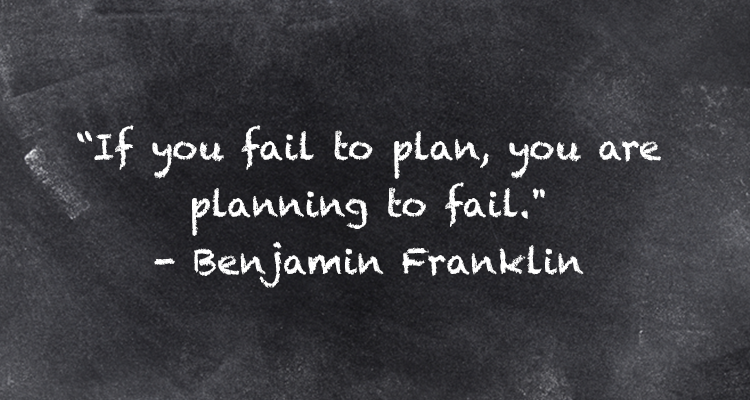
Ben Franklin was known for his brilliant inventions and maybe even more so for embodying the modern American entrepreneur. His ability to do so was not a fluke; he planned it.

Research has shown that when an individual sets measurable goals for themselves, they are more like to achieve them. Set specific daily, weekly, monthly, and even yearly goals for yourself and your business. Not only should you write down what your goals are but also determine the optimal path to get you there. In doing this you are able to visualize the path you must take to get there. Consistently review your goals and plans to achieve them on a regular basis.

2. They reflect on their day.


As one of the most powerful women in the world, Oprah Winfrey has shown us that it is possible to do it all. She has conquered television, movies, magazines, and more. What does she credit to her success? The ability to reflect on her day through meditation.

All too often entrepreneurs rush through their day as if it were a sprint, trying to cross off everything on their "to do" list as fast as possible. This can easily lead to a common business-killing phenomenon - burn out. Learn to take time out of your day to reflect. Meditation can come in many forms, all of which are cathartic activities that help you stay grounded and prevent burning yourself out. For some this can be as simple as taking a twenty-minute walk. For others, try writing in a journal.

3. They form mutually beneficial work and personal relationships.


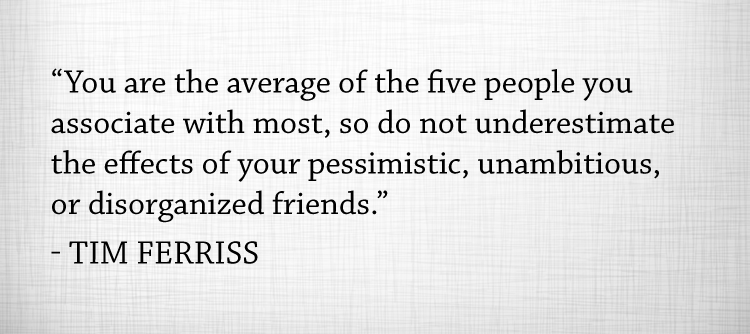
One of the most important things I've learned being an entrepreneur is the ability to culminate relationships with others in your industry that benefit you on both a personal and business level. Ferriss provides us the perfect example of this lesson with how he marketed his book and became friends with others in his industry. When writing his best-seller, "The 4-Hour Work Week", he created chapters he knew certain bloggers would find interesting. This led to an abundance of organic blog mentions, fueling the success of his book and, in the process, helping him create meaningful relationships.

Try to associate yourself with other successful entrepreneurs as much as possible. Doing so will help you learn from them, make you a more capable entrepreneur and possibly lead to more business opportunities.

4. They know how to promote themselves.


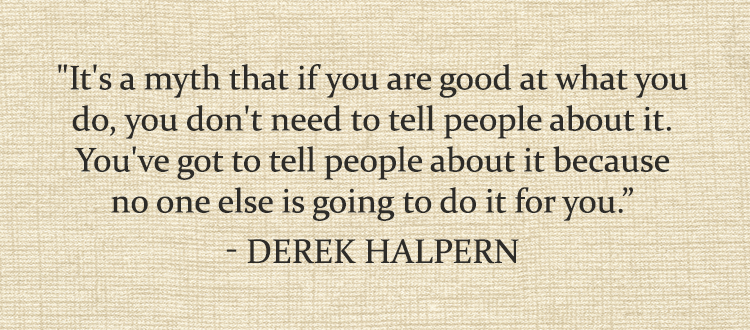
Derek Halpern, of the popular psychology/marketing blog SocialTriggers.com, reveals one of the key obstacles holding back most entrepreneurs - they don't know how to promote themselves. There is a fine line between arrogant bragging and (what I like to call) humbly promoting yourself. In order to show people your success without coming off as a pompous jerk, you must master the art of self-promoting.

"Context is everything," says Halpern. Rather than bringing up your accomplishments first, wait for the perfect opportunity, when someone else raises the topic first or provoke them to do so. This makes boasting of your success seem more organic and natural to the conversation you are having.

5. They work for more than money.


Steve Jobs, who has become a legend among entrepreneurs, attributes his success not to chasing money but to the desire to change the world for the better. In doing, so he created some of the world's most brilliant products.

Entrepreneurs that allow their focus to be 100% on financial gain neglect long-term well-being which leads many business owners to feel unfulfilled and depressed. Just as you should have a diversified portfolio of assets, you should diversify your well-being (i.e. spiritual, mental, emotional) in regards to your business.

6. They start before they feel ready.


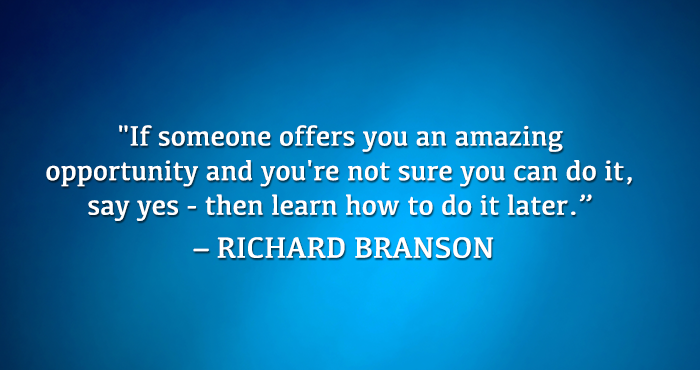
What holds back many people from even starting their own business is the preconceived notion that they need more experience. The truth in that matter is that there is no "right" time to venture into the world of entrepreneurship. In fact, many (if not all) new entrepreneurs have no idea what they are doing - even the world's most successful such as Richard Branson. Starting a business is like reading a Choose Your Own Adventure book. There are various different ways to reach the end...just be willing to finish the book.

7. They learn from their failures.


Resilience and being able to reflect on your failures is what separates good entrepreneurs from the great ones. The ability to get knocked down over and over while maintaining focus on your end-goal requires tremendous mental fortitude. We often see the most successful business owners invite failure into their lives. A common mantra in the tech world is, "fail fast, fail often". In doing so you spend less time actually failing and more time learning about what got you there so you don't repeat your mistakes.
 

Friday, 24 October 2014

10- Point Checklist For An Effective PPC Campaign


Just because setting up a blog is easy doesn’t mean everybody who blogs is an all-star. Along the same lines, just because Google and Bing make it easy to set up a PPC campaign doesn’t mean every advertiser is doing it properly. In fact, the low barrier to entry means a high number of PPC advertisers are doing it wrong.

This is good news! If you understand how to set up an effective PPC campaign, the odds are good you will outperform competitors who haven’t learned the value of following this checklist.

10-Point Checklist For Effective PPC Advertising

1. Have a clearly defined goal. Without one, how will you know if you are spending too much or not enough? A well-defined goal includes both a target number of leads generated by the campaign, and also a time frame in which to obtain them.

2. Understand the value of a customer. If the ROI calculation of your PPC campaign is based only on the value of the conversion, you may grossly underestimate your results. For instance, a PPC campaign may revolve around a $100 introductory offer that generates $20 of profit. But if the average lifetime value of a customer is $1,000 of profit over five years, what is the true value of your PPC conversion — $20, $5,000 or something in between? Define value with care.

3. Define what you are willing to pay for a validated lead. Once you have established the value of a customer, the next step is to determine how much you are willing to spend to obtain a new customer through your PPC campaign.

4. Have an appropriate budget to support your goals. A lofty goal plus a shoestring budget equals disaster. A significant ad spend is necessary – probably much more than the $500 per month many advertisers view as their ceiling – to generate enough conversions to make the campaign pay.

5. Make sure the market is viable. To some extent PPC is a numbers game. If enough people aren’t searching for your products or keywords to generate a critical mass of conversions, your campaign will never get explosive results. Do preliminary keyword research to make sure sufficient keyword search volume exists for your target terms.

6. Create landing pages for the campaign. Sending PPC visitors to the home page of a website is a huge mistake. Instead, craft customized landing pages specifically designed to convert visitors into sales leads.

7. Have resources to make site changes and manage the campaign. PPC campaigns involve systematic testing that leads to continuous refining and adjusting. To execute properly, a firm needs talent and experience in both managing campaigns and making changes to landing pages.

8. Have sales people ready to answer phone calls and emails immediately. Many potentially blockbuster PPC campaigns are destroyed by inept follow-up. When a PPC visitor converts, responding quickly and effectively is absolutely imperative.

9. Don’t give up too quickly. Several months are required to establish valid PPC performance benchmark data, and to know whether PPC is a good fit. In the early months of a campaign, conversions may be few and far between – but this does not necessarily mean you’ve failed. What you learn during those early months will help you adjust your campaign in terms of budget, the offer and the keyword targets. As the campaign is refined, conversions may well improve, and improve dramatically.

10. Track and validate phone calls and emails generated by your campaign. Without tracking, you cannot know whether a phone or email inquiry was generated by your PPC campaign, making ROI calculations impossible. But tracking is not enough: A firm must validate leads to separate true leads from other types of inquiries such as misdials, sales solicitations and customer service requests. If you consider all inquiries to be sales leads, you will greatly overestimate the effectiveness of your campaign.

Stay Actively Involved At All Times

Most of the points in this checklist require ongoing attention. Besides monitoring things within your control, such as the nature of your offer and the keywords you target, you must take into account things beyond your control that can change the dynamics of your PPC campaign. Competitors change strategies in ways that affect your results. Keyword volumes change as user behavior changes and as buzzwords come in and out of fashion within a niche. Thus, bonus tip, #11, is to conduct a strategic review of your campaign, preferably every six months, but definitely once each year. A fresh strategy will make your tactical proficiency that much more productive.

http://socialmediaimpact.com/10-point-checklist-effective-ppc-campaign/#