Wednesday, 3 December 2014

4 Tips for Making Millions Quickly Marketing Through Infomercials

Most of us have heard of the ThighMaster, the Snuggie or the Ginsu Steak Knives as overnight success products that have amassed millions of dollars selling directly to consumers through Direct Response Television (DRTV) commercials.

Warren Tuttle, president of the United Inventors Association of America, has been working within the DRTV industry for decades. He was the person behind the television direct response mega-hit Smart Spin that generated nearly ten million units through a series of successful infomercials. I sat down with Warren to get his top four tips to getting your product to launch through DRTV and be the next mega wonder.


1. Rapidly create national brand recognition


The biggest advantage of DRTV is the ability to create, very rapidly, brand recognition through significant exposure on today's most dynamic advertising medium. Consumers are more likely to shop for a product they have seen six to eight times, through repeated TV ad exposure. Successful DRTV programs can drive significant sales volume and eventually provide retailers with very high sales, rapid stock turn, strong gross margins and increased bottom line profits.


2. DRTV companies focus on different niches


DRTV companies are no different then other industries when focusing on specific niches or areas of differentiation. Some are house and home oriented, while others focus on exercise or personal care. Even the length of commercials are different, as some companies are excellent in developing two-minute short forms, while others better at the 30-minute long format.

Keep in mind, though, that not all products are well suited for DRTV success. It is a rapid roll out process, where a product generally moves through a short selling life cycle at a highly accelerated pace. Some products require a slower burn to get to market and succeed, while other products are more platform oriented with a line up of SKUs that need to be appropriately showcased. Products need to be highly demonstrable. Not all successful products are, so it may be better to introduce some types of products to market through a traditional retail roll out and avoid the DRTV model altogether.


3. Do your homework interviewing DRTV companies


Each DRTV company needs to be researched and vetted. Inventors need to do their homework and find out what success stories each DRTV company has been responsible for, in what industry they specialize and how they have treated the individuals who have brought them products in the past. Inventors need to fully vet each company's history and reputation, since there are companies that have scammed inventors in the past.

Make a point to attend one of the industry trade shows such as The Response Expo or the Electronic Retailing Association Tradeshow as these shows can provide a great opportunity to find resources and build connections for your product launch.


4. Avoid upfront costs launching your DRTV product


Many successful DRTV companies will provide the necessary capital, along with creative production and manufacturing resources to test products and roll out successes and simply pay the inventor an ongoing royalty. Patents are generally helpful and typically command a higher royalty but are not always necessary. It depends upon the product and the DRTV company, so it is critical to align correctly. Working prototypes that prove function are also of value and can also be used to film an audition video.

The other items that are important is the creation of a professional pitch and a descriptive sell sheet. Royalties typically run from 2 percent to 6 percent of wholesale. A successful TV roll out will generally last about 18 months.

In an ever increasing competitive environment where capital is often a deal breaker to launching a product, DRTV can be the perfect solution.

Monday, 24 November 2014

Do You Know Where Your Buyers Hang Out Online?


The Internet is a pretty big place, going from a single website in 1991 to more than 1 billion in 2014. At the same time, the number of users online has jumped more than tenfold from 1999 to 2013. If you’re a business owner, the challenge of finding your buyers online in order to deliver the most targeted advertisements directly to them has never been harder!

If you’re currently struggling to match your online activities to your buyers’ Internet habits, give the following three strategies a try:

1. Social-networking sites

According to the Content Marketing Institute, social media and blogs account for 23 percent of all time spent online. So there’s a good chance that, no matter what types of buyers you’re targeting, you can find them on some type of social-networking site.

Of course, the recent flight of teenagers from Facebook demonstrates that not all demographics participate equally on each of these popular sites. If you want to know where your specific buyers are, you need to familiarize yourself with the group-usage statistics associated with each platform.

One of the best sources of this type of information is the Pew Research Internet Project’s “Social Media Update 2013” (the most recent year this information has been made available).

If your target buyer persona is female, you might note that Facebook and Pinterest show promise, as more women than men are active on each site. However, if your buyers tend to be older, getting active on Facebook might be a better choice, as 45 percent of online adults ages 65 and older maintain profiles on the site, while only 9 percent of this group is active on Pinterest.

The Pew study includes demographic data on Twitter, Instagram and LinkedIn that are worth a look. However, while you should use these statistics as a rough guide, they shouldn’t be the “be all, end all” of your buyer identification efforts. Instead, use these numbers as a jumping-off point to determine where you should begin engaging, but be sure to measure your performance on each site to see when and if you need to change course.

2. Authority blogs

Every industry has authority bloggers, and if you can find the ones that are popular in your niche, you have a number of opportunities to connect with your target buyers -- from submitting guest posts for publication, running display ads, to responding to reader questions in the comments.

You might already know these sites, and if you do, use the techniques listed above to make your presence known. If you don’t, here are a few strategies for finding them:

  • Go to alltop.com and search for your industry. Any of the blogs listed might be authority blogs, though you’ll want to qualify them further by checking for recent, consistent publication and active social profiles.
  • Go to Topsy and enter your target keywords. Filter your results so that you’re viewing a week’s worth of popular links -- there’s a good chance these have come from authority blogs.
  • Find one authority blogger and open his or her Twitter profile. Look for any other sites whose content is being retweeted -- these are likely authority sites as well.

3. Message boards

Message boards might sound like a dated Internet convention on par with webrings and chat rooms. But the modern message board -- think Reddit -- can actually be a hotbed of target-buyer activity.

Here’s how to find these resources:

  • Google “[your niche] message board.” It’s a straightforward approach, but it works.
  • Find the subreddit that caters to your industry. Not only can this be a good place to share your content, it can reveal a number of other authority blogs or message boards you should target within the other links that are shared.
  • Look for public Facebook Groups. The extent to which Facebook has been adopted across groups makes it a good fit for just about every target buyer. Conduct a few searches on Facebook to find the public Groups where your buyers are hanging out and then get active there!

Bear in mind that message boards can be particularly sensitive to activity that’s deemed too self-promotional. Become an active member of the community before you start sharing, and keep your eyes open.

The constant expansion of the Internet means that new hot sites will always be popping up, while former favorites will die out. Use the strategies above to keep your finger on the pulse of your industry's online activity and use this knowledge to your advantage to get your message in front of your target buyers.

Sunday, 16 November 2014

Social Media Karma and the Golden Rule


Have you heard of the golden rule? Do unto others as you would have them do unto you. In other words, treat other people in the way you’d like to be treated. This same rule applies to the world of social media.

So think before you tweet. Here are a few etiquette rules:

Don't embarrass professionals.

Journalists, writers, bloggers, content creators, whatever you call them, they all are trying to get their work out there. One way they do so is by spreading the word on social media. And this strategy is a win-win, as the author is able to market her posts in a simple fashion and people can easily discover new stories. But because of how fast the world of media is moving, sometimes errors occur, like typos, grammatical errors or incorrect information.

Do you point out the mistake publicly to embarrass and shame the writer or author? Or do you private message the individual so they can correct the mistake as quickly as possible? I choose the kinder, quieter route because it does not serve you or the other party to be mean and spiteful. Be gracious, and the author will be thankful and you’ll probably gain a friend for life. 

And another thing: Don't dismiss the person immediately when you see a typo or mistake. Read the article to the end, as you may find it useful and may benefit from the piece. Dismissing a writer’s credibility completely because of a single typo seems inflexible to me. 

Give credit where credit is due.

It’s standard procedure to give credit to the photographer if you use their images. If you see someone using your photos, and they haven’t given you photo credit, private message them. It’s possible that they may not really understand the protocol. Be gentle and you will be surprised to find that it is an innocent mistake.

But keep in mind that everyone doesn't just want a photo credit. Images are copyrighted, so the best route is to ask before you use.

Don’t be a bully or a tattletale.

I have seen so many forms of bullying over the years on social media. I usually hang back, watching carefully and not reacting immediately. Whether the attack is directed at you or at a friend, assess the situation first and don't fire off a tweet or comment immediately. Also, don't go ganging up on the person -- we’re not in high school. The drama and gossip will get back to the individual and probably come back to haunt you.

Analyze and process the situation. Is this worth your time, your energy or even a tweet? When you re-tweet them or call them out, it gives the person validation and the situation momentum, especially if the person has a decent following. 

So whenever I completely disagree with an article or a tweet, I chat off line rather than give the article or that individual any more attention than is necessary. Of course, one can have a productive healthy discussion -- just keep it professional.


Anonymity is not carte blanche.

Just remember, tweeting from a smartphone or a computer screen does not give you the right to be unkind. Being friendly and helpful to people goes so much further than a public attack. Guess what? It reflects back on you. People may not acknowledge your action openly, but they will go “radio silent” on you. What does that mean? No more shares, re-tweets or engagement.

Social media seems like such an expansive universe but really it is a small, small social world. I believe that in social media, that “six degrees of separation” connects us in a way that we were never connected before. So think before you blast out your spiteful tweets or comments. These connections bind us together by our shares.

Friday, 7 November 2014

4 Specific Focused Tasks Equals Profits


Entrepreneur Uses Low Tech Methods to Build a Fortune

Paul Sowinski has been keeping a low profile for the past 6 years with other priorities — getting married and having three kids. Home Business Magazine first profiled him back in 2003 and recently caught up with him again to see “where he is now.” At 34, he’s back to his “old self,” building his home business and being “'entertaining” and having some fun while doing it.

When Paul originally started Simple Toner in 1998, he had a grand vision. Within a couple months of his 19th birthday, he went from bagging groceries to running a thriving business selling toner cartridges to other businesses.

In his first year. Paul processed $40,000 in sales. By year two, he doubled sales by literally working twice as hard. Then “the grind” set in. After the initial boost, sales slowed and he needed to jumpstart his company. Over the next several years, Paul tried everything to build his business: trade shows, cold calling, attending networking events, passing out flyers, and even hiring a skywriter at the height of the dotcom boom. Some things worked, many didn’t.

Paul’s big break came when he figured out that the key to success was simply doing certain very specific, focused tasks every single day: #1) making 250 phone calls; #2) working out at the gym; #3) reading to his kids; and #4) practicing computer coding. Every single day, Paul does these four specific, focused tasks (with the exception of phone calls, which he only does during the normal work week.)

This obsessiveness and focus sometimes drives Melissa, his wife of five years, crazy. “The thing about Paul is that most of his focus is on printer toner cartridges. But every day, he works with our kids teaching them how to improve and compete in their own worlds. I respect him for that," says Melissa. Paul adds, “For years I tried many different things. My world changed when I started simplifying. I don’t have to think about my schedule. I don’t have to plan my day. I just do four things every day and it’s taking me in the direction I want to go.”

Sowinski wants to be the largest supplier of toner cartridges to small business in the US within the next three to five years.

Thursday, 30 October 2014

7 Habits of Highly Successful Entrepreneurs

Success is not an overnight phenomenon. It requires a unique set of skills built over time. While there is no manual outlining what makes someone successful, the most successful entrepreneurs in the world seem to share these 7 habits.

1. They set goals and outline specifically how to reach them.


Ben Franklin was known for his brilliant inventions and maybe even more so for embodying the modern American entrepreneur. His ability to do so was not a fluke; he planned it.

Research has shown that when an individual sets measurable goals for themselves, they are more like to achieve them. Set specific daily, weekly, monthly, and even yearly goals for yourself and your business. Not only should you write down what your goals are but also determine the optimal path to get you there. In doing this you are able to visualize the path you must take to get there. Consistently review your goals and plans to achieve them on a regular basis.

2. They reflect on their day.


As one of the most powerful women in the world, Oprah Winfrey has shown us that it is possible to do it all. She has conquered television, movies, magazines, and more. What does she credit to her success? The ability to reflect on her day through meditation.

All too often entrepreneurs rush through their day as if it were a sprint, trying to cross off everything on their "to do" list as fast as possible. This can easily lead to a common business-killing phenomenon - burn out. Learn to take time out of your day to reflect. Meditation can come in many forms, all of which are cathartic activities that help you stay grounded and prevent burning yourself out. For some this can be as simple as taking a twenty-minute walk. For others, try writing in a journal.

3. They form mutually beneficial work and personal relationships.


One of the most important things I've learned being an entrepreneur is the ability to culminate relationships with others in your industry that benefit you on both a personal and business level. Ferriss provides us the perfect example of this lesson with how he marketed his book and became friends with others in his industry. When writing his best-seller, "The 4-Hour Work Week", he created chapters he knew certain bloggers would find interesting. This led to an abundance of organic blog mentions, fueling the success of his book and, in the process, helping him create meaningful relationships.

Try to associate yourself with other successful entrepreneurs as much as possible. Doing so will help you learn from them, make you a more capable entrepreneur and possibly lead to more business opportunities.

4. They know how to promote themselves.


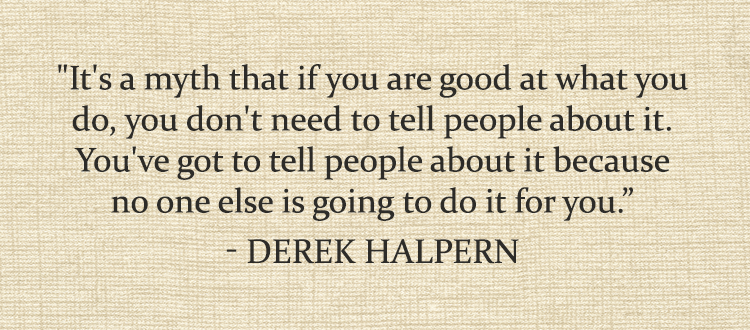
Derek Halpern, of the popular psychology/marketing blog SocialTriggers.com, reveals one of the key obstacles holding back most entrepreneurs - they don't know how to promote themselves. There is a fine line between arrogant bragging and (what I like to call) humbly promoting yourself. In order to show people your success without coming off as a pompous jerk, you must master the art of self-promoting.

"Context is everything," says Halpern. Rather than bringing up your accomplishments first, wait for the perfect opportunity, when someone else raises the topic first or provoke them to do so. This makes boasting of your success seem more organic and natural to the conversation you are having.

5. They work for more than money.


Steve Jobs, who has become a legend among entrepreneurs, attributes his success not to chasing money but to the desire to change the world for the better. In doing, so he created some of the world's most brilliant products.

Entrepreneurs that allow their focus to be 100% on financial gain neglect long-term well-being which leads many business owners to feel unfulfilled and depressed. Just as you should have a diversified portfolio of assets, you should diversify your well-being (i.e. spiritual, mental, emotional) in regards to your business.

6. They start before they feel ready.


What holds back many people from even starting their own business is the preconceived notion that they need more experience. The truth in that matter is that there is no "right" time to venture into the world of entrepreneurship. In fact, many (if not all) new entrepreneurs have no idea what they are doing - even the world's most successful such as Richard Branson. Starting a business is like reading a Choose Your Own Adventure book. There are various different ways to reach the end...just be willing to finish the book.

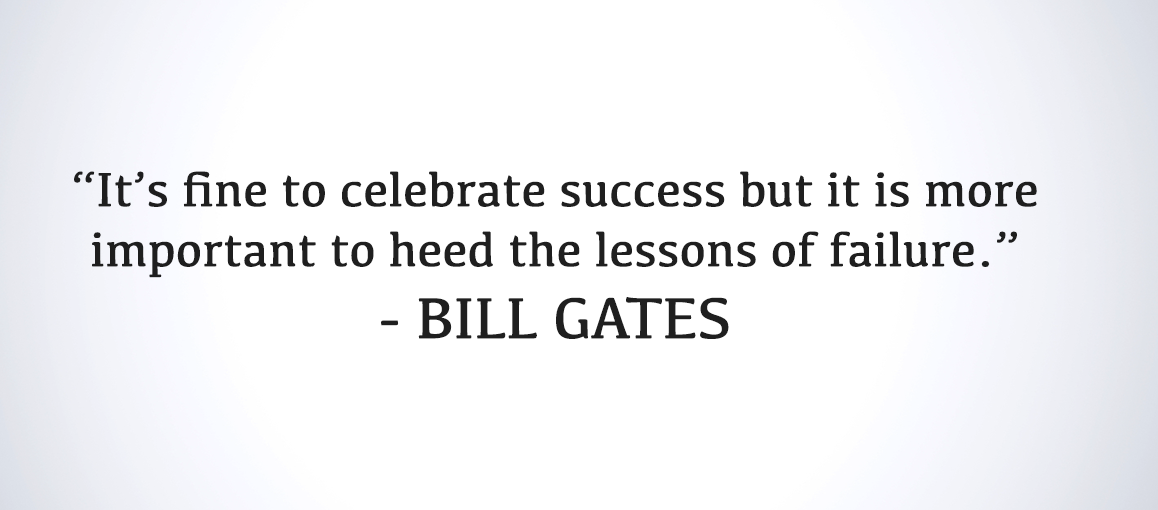
7. They learn from their failures.


Resilience and being able to reflect on your failures is what separates good entrepreneurs from the great ones. The ability to get knocked down over and over while maintaining focus on your end-goal requires tremendous mental fortitude. We often see the most successful business owners invite failure into their lives. A common mantra in the tech world is, "fail fast, fail often". In doing so you spend less time actually failing and more time learning about what got you there so you don't repeat your mistakes.
 

Friday, 24 October 2014

10- Point Checklist For An Effective PPC Campaign


Just because setting up a blog is easy doesn’t mean everybody who blogs is an all-star. Along the same lines, just because Google and Bing make it easy to set up a PPC campaign doesn’t mean every advertiser is doing it properly. In fact, the low barrier to entry means a high number of PPC advertisers are doing it wrong.

This is good news! If you understand how to set up an effective PPC campaign, the odds are good you will outperform competitors who haven’t learned the value of following this checklist.

10-Point Checklist For Effective PPC Advertising

1. Have a clearly defined goal. Without one, how will you know if you are spending too much or not enough? A well-defined goal includes both a target number of leads generated by the campaign, and also a time frame in which to obtain them.

2. Understand the value of a customer. If the ROI calculation of your PPC campaign is based only on the value of the conversion, you may grossly underestimate your results. For instance, a PPC campaign may revolve around a $100 introductory offer that generates $20 of profit. But if the average lifetime value of a customer is $1,000 of profit over five years, what is the true value of your PPC conversion — $20, $5,000 or something in between? Define value with care.

3. Define what you are willing to pay for a validated lead. Once you have established the value of a customer, the next step is to determine how much you are willing to spend to obtain a new customer through your PPC campaign.

4. Have an appropriate budget to support your goals. A lofty goal plus a shoestring budget equals disaster. A significant ad spend is necessary – probably much more than the $500 per month many advertisers view as their ceiling – to generate enough conversions to make the campaign pay.

5. Make sure the market is viable. To some extent PPC is a numbers game. If enough people aren’t searching for your products or keywords to generate a critical mass of conversions, your campaign will never get explosive results. Do preliminary keyword research to make sure sufficient keyword search volume exists for your target terms.

6. Create landing pages for the campaign. Sending PPC visitors to the home page of a website is a huge mistake. Instead, craft customized landing pages specifically designed to convert visitors into sales leads.

7. Have resources to make site changes and manage the campaign. PPC campaigns involve systematic testing that leads to continuous refining and adjusting. To execute properly, a firm needs talent and experience in both managing campaigns and making changes to landing pages.

8. Have sales people ready to answer phone calls and emails immediately. Many potentially blockbuster PPC campaigns are destroyed by inept follow-up. When a PPC visitor converts, responding quickly and effectively is absolutely imperative.

9. Don’t give up too quickly. Several months are required to establish valid PPC performance benchmark data, and to know whether PPC is a good fit. In the early months of a campaign, conversions may be few and far between – but this does not necessarily mean you’ve failed. What you learn during those early months will help you adjust your campaign in terms of budget, the offer and the keyword targets. As the campaign is refined, conversions may well improve, and improve dramatically.

10. Track and validate phone calls and emails generated by your campaign. Without tracking, you cannot know whether a phone or email inquiry was generated by your PPC campaign, making ROI calculations impossible. But tracking is not enough: A firm must validate leads to separate true leads from other types of inquiries such as misdials, sales solicitations and customer service requests. If you consider all inquiries to be sales leads, you will greatly overestimate the effectiveness of your campaign.

Stay Actively Involved At All Times

Most of the points in this checklist require ongoing attention. Besides monitoring things within your control, such as the nature of your offer and the keywords you target, you must take into account things beyond your control that can change the dynamics of your PPC campaign. Competitors change strategies in ways that affect your results. Keyword volumes change as user behavior changes and as buzzwords come in and out of fashion within a niche. Thus, bonus tip, #11, is to conduct a strategic review of your campaign, preferably every six months, but definitely once each year. A fresh strategy will make your tactical proficiency that much more productive.

http://socialmediaimpact.com/10-point-checklist-effective-ppc-campaign/#

Tuesday, 14 October 2014

10 Tips on How to Choose a Domain Name for Your Business

These days, choosing a domain is one of the most important things you can do for an emerging business. In fact, until you have the domain name set, you may not want to get too cozy with that great business name idea you had. You can have the perfect name idea for your business, but if you can’t get the right domain, you’re probably going to want to scrap it and start over.

So before we get too far ahead of ourselves, let’s look at 10 tips for choosing a great domain name for your business.


1. Avoid Seemingly Spammy Characters
If you’re wondering how to choose a domain name for SEO, this is it. It used to be that you would stuff a bunch of keywords in your top level domain and that would help your site rank. These days, that doesn’t matter nearly as much as it once did. Today, you’ll do well if you focus on avoiding things like numbers and hyphens that appear spammy to the search engines. Keep in mind, though, that this isn’t a hard and fast rule. There are reputable websites that use these characters and can rank on the search engines, but just know that using them may put you at a slight disadvantage – especially if you’re over-using them. www.dont-overuse-hyphens-or-123s-in-your-url.com.


2. Keep it Short
Here’s another way to help with SEO. Whether you’re trying to learn how to choose a personal domain name or how to choose a domain name for your blog, keep it short. Long URLs often appear to be keyword stuffed and don’t tend to perform as well. Even if you’re not worried about SEO, don’t you want your domain to be as memorable as possible? Keep it short.


3. Make it Memorable
Keeping your domain name short is one way to make it memorable, but here are two more: Avoid names that can be pronounced in many different ways, and avoid misspellings (even if you think they are clever). Unless you plan to put a lot of marketing money behind your brand, it’s going to be difficult to get that name to stick in people’s minds.


4. Consider Choosing a Name with Relevance
This step is completely optional. Some of the best sites have the most random-seeming names. It’s okay. In a world where everyone has a website, it’s difficult to register a descriptive name for your business. But if you can choose something that relates to your business, it will help new customers easily understand what you’re all about.


5. Make a List of Great Names
Start brainstorming. This is the fun part. Just jot down every idea that comes to mind. Don’t be embarrassed if you think it’s silly. Just keep those ideas flowing directly from your brain through your pen (or keyboard).


6. Use a Domain Name Generator (If You’re Stuck)
If you are having trouble picking a domain name off the top of your head, look for domain name suggestions. Selecting a domain name isn’t easy, and you’ll likely go through many before you choose one that works.


7. Check Availability
Now, don’t even bother narrowing down your list. An availability check will do that for you. Head to a domain name registrar, such as Domain.com or Register.com, and start typing in the names on your list. Cross off the ones that are already registered and put a star next to those that are open. From here, you should be able to narrow your list to a shortlist of available domains.


8. Look for Similar Domains
Take that shortlist and think about how people could misspell or misunderstand those names. Now, check the misspellings and misunderstandings. If they point to a competitor’s site, it’s a definite “no go.” If it points to a non-competitor, you’ll have to decide if you can live with that. Ideally, any common misspellings or misunderstandings should be available, so you can also register those.


9. Check Availability Across Popular Domain Extensions
Many people will register their domain on the three most popular domain extensions: .com, .net and .co. When you’re ready to register, keep in mind that it can be done at any registrar, but they are not all the same. Prices and services vary among them, so be sure to do your homework. We often recommend Name Cheap and Network Solutions, but there are many choices.


10. Register Your Domain
Now that you’ve learned how to choose a domain name in 2014, you’re ready to take the plunge and register. You can check availability and register at any of the registrars mentioned in this post or at 123 Reg or United Domains. Selecting a domain name is the hard part. Choosing a domain name registrar is easy.